
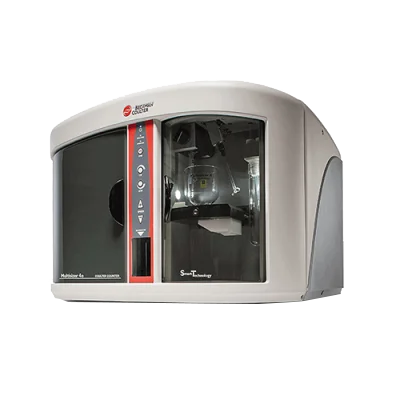
-
Key Features
Spot Small Differences
Easy-to-use Software
- ADAPT Software features automatic pass/fail check
- Pre-configured methods deliver results with 3 clicks or less
- Simplifies analyzer operation by experts & novice users alike
- 1-click overlay with historical data
- Intuitive user diagnostics keep you informed during sampling
- Simplified method creation for standardized measurements
ADAPT Software enables 21 CFR Part 11
PIDS Technology* for Direct Detection of 10 nm Particles
- 3 light wavelengths (450, 600, & 900 nm) irradiate samples with vertical & horizontal polarized light
- Analyser measures scattered light from samples over a range of angles
- Differences between horizontally & vertically radiated light for each wavelength yield high-resolution particle size distribution data
-
Technical Specs
TechnologyLow-angle forward light scattering with additional PIDS(Polarization Intensity Differential Scattering) Technology. Analysis of vertical and horizontal polarized light at six different angles using three additional wavelengths. Full implementation of both Fraunhofer and Mie Theories.
Light SourceDiffraction: Laser Diode (785 nm)
PIDS: Tungsten lamp with high-quality band-pass filters (475, 613 and 900 nm)Particle size analysis rangeMeasurement range: 10 nm – 3,500 µm
Dry Powder System Module (DPS): 400 nm – 2,000 µm
Universal Liquid Module (ULM): 10 nm – 2,ooo µmElectrical interfaceUSB
Power consumption≤ 6 amps @ 90 – 125 VAC
≤ 3 amps @ 220 – 240 VACTemperature range10 – 40°C (50 – 104°F)
Humidity0 – 90% without condensation
ComplianceCreates 21 CFR Part 11 enabling features
RoHS
Certifications:
– EU EMC Directive 2014/30/EU
– CISPR 11:2009/A1:2010
– Australia and New Zealand RCM MarkData export file formatsXLSX, TSV, PDF
File import capabilityFrom all LS 13 320 Legacy and LS 13 320 XR system
*Software operating systemRequires Microsoft Windows 10, 64-bit environment
(US, English regional settings only)DimensionsHeight: 19.5″ (49.53 cm)
Width: 37″ (93.98 cm)
Depth: 10″ (25.4 cm)Weight52 lbs (23.5 kg)
-
Accessories
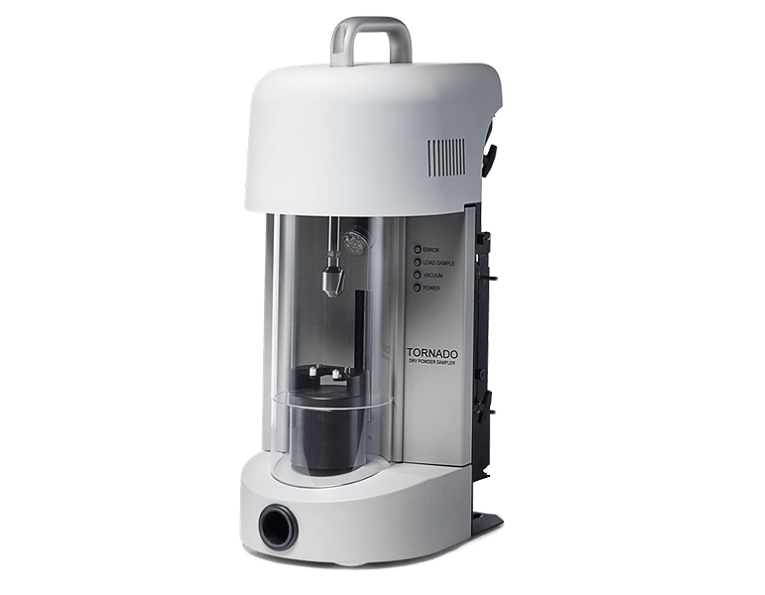
Dry Powder System
Analytical size range: 400 nm – 3,500 µm
- Measures entire sample as required by the ISO 13 320 Standard
- Programmable Obscuration setting to optimize sample feed rate
- User-selectable vacuum pressure for maximum dispersion control
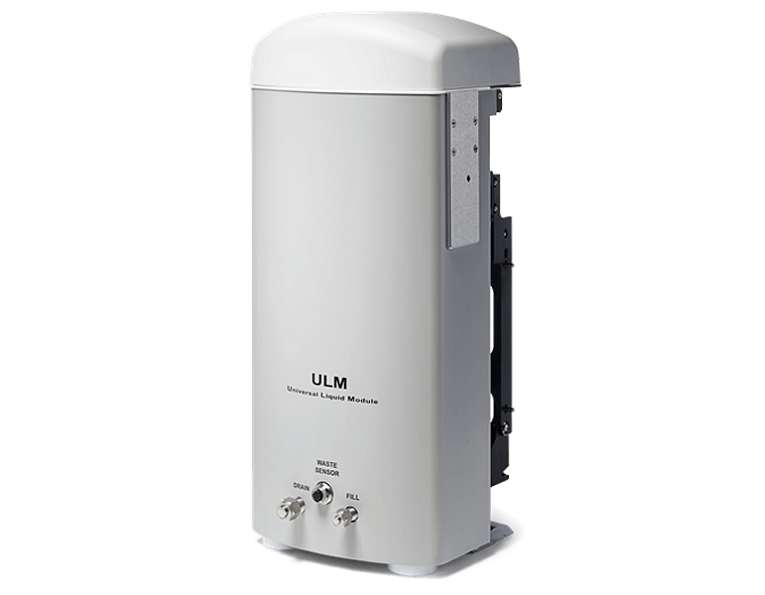
Universal Liquid Module
Analytical size range: 10 nm – 2,000 µm
- Fully automatic with auto-dilution, auto-filling and auto-rinsing
- Analyses samples suspended in aqueous as well as non-aqueous diluents for maximum flexibility
- Wetted materials list: Teflon®, 316 Stainless Steel, Glass, Kal-rez® and PEEK
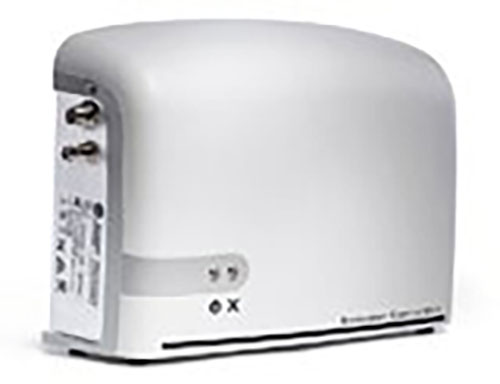
Sonicator Control Unit
- Needle probe sonicator for additional dispersion control of wet samples
- Fully adjustable power settings
- In-situ sonication with ULM before/during the run, can also be operated external to module
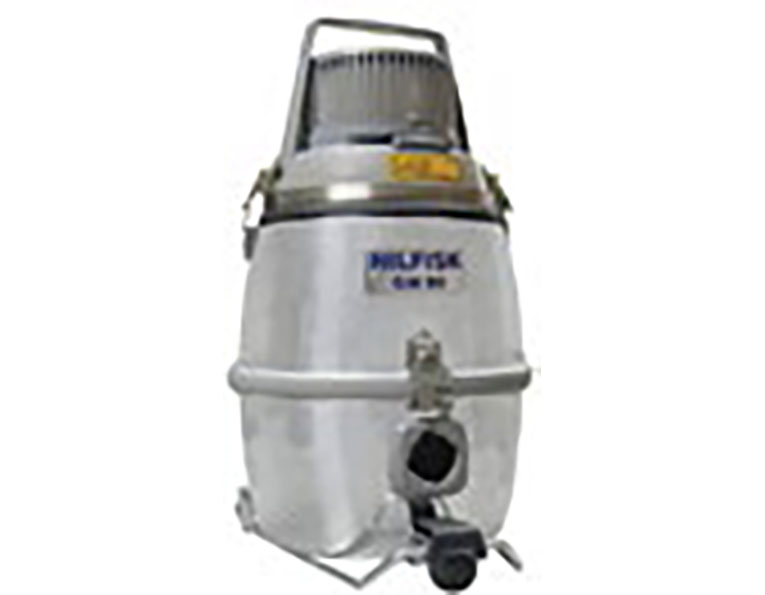
EU Vacuum Cleaner
- Vacuum pressure range fully adjustable
- Integrated vacuum control unit for optimised vacuum/obscuration settings
- Two vacuum systems to choose from
-
Applications

Application
Application
Application
Application
Application
Application
Application
Application
Application
Application
-
Capabilities
The LS 13 320 XR particle size analyzer uses advanced laser diffraction and PIDS technology for the sizing of non-spherical, sub-micron particles. Initially, particle sizing by laser diffraction was limited to the use of the Fraunhofer diffraction theory. Laser diffraction offers a number of advantages – laser diffraction analyzers go beyond simple diffraction effects. General approaches are now based on the Mie theory and the measurement of scattering intensity over a wide scattering angular range is employed.
Using PIDS Technology
Pioneered by Beckman Coulter, most laser diffraction manufacturers use the above two approaches, i.e., wide angular detecting range and short wavelength, to size small particles. However, sizing even smaller particles (tens of nanometers in diameter), cannot be achieved using only these two approaches. Any further increase in scattering angle will not yield any significant improvement due to the everslower angular variation. Figure 2 is a 3-D display that illustrates the very slow angular variation for small particles. For particles smaller than 200 nm, even by taking advantage of the above two approaches, it is still difficult to obtain an accurate size.